
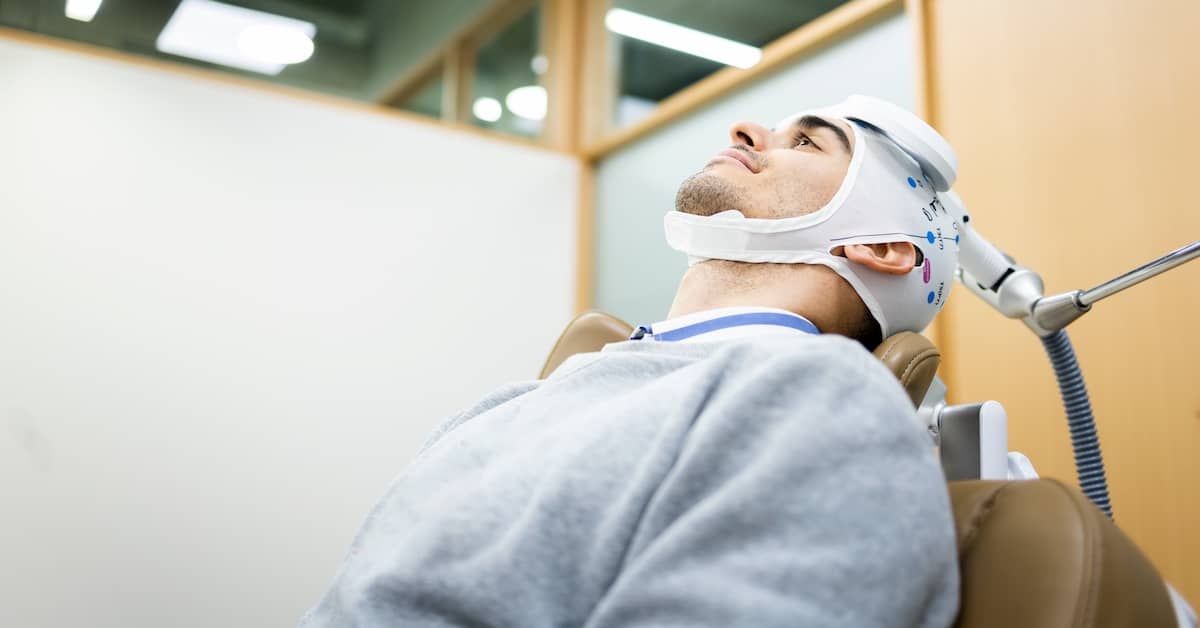
Multiple clinical studies show that transcranial magnetic stimulation (TMS) is safe and effective. While TMS effectiveness is important, the real test for most patients is: Will TMS work for me?
At NeuroHealth Treatment Centers, we work with patients on an individual basis to determine how effective TMS therapy might be for their mental health. Your comfort, safety, and satisfaction are our top priority.
Call 954-417-7575 today for a FREE consultation at our clinic in Fort Lauderdale. We provide effective, targeted TMS treatment for a variety of mental health conditions for patients throughout South Florida.
What Is the Success Rate of TMS Therapy?
In clinical studies, TMS therapy has a success rate of approximately 35%–55% for major depressive disorder (MDD). Prior to gaining FDA approval for the treatment of major depression, the effectiveness of TMS was studied extensively. Today, it is recognized as a novel and powerful alternative to standard protocols for MDD such as medication and therapy.
Studies of the effectiveness of TMS for other conditions vary by sample size, methodology, and patient selection criteria. This has led to more wide-ranging results for specific disorders, though TMS therapy has an excellent safety and efficacy profile overall.
Ultimately, TMS effectiveness is well-established in scientific literature. The two most important components in successful treatment are (1) determining each individual patient’s candidacy for TMS and (2) designing an effective course of treatment based on the patient’s symptoms and brain anatomy.
TMS Effectiveness by Condition
At NeuroHealth Treatment Centers, our psychiatrists and clinical staff believe strongly in patient education. We closely monitor the latest research on cutting-edge mental health treatments so we can help our patients find the best option for psychiatric care.
Below, we discuss some of the most important findings on the efficacy of TMS therapy for the conditions we treat:
How Effective Is TMS for Depression?
TMS effectiveness for depression has been the subject of extensive research. Many patients experience relief from depressive disorders with TMS treatment, although clinical outcomes vary.
Notable recent studies include:
- Researchers at UCLA Health found that 54% of patients with symptoms of major depression exhibited clinical improvement after 6–8 weeks of repetitive transcranial magnetic stimulation (rTMS) sessions.
- A meta-analysis published in BMC Psychiatry found that nearly 40% of patients with treatment-resistant depression responded positively to rTMS, with over 35% experiencing remission.
- 90% of patients who responded to an acute rTMS treatment course for major depression continued to see improvement at a 6 month follow-up, according to a study in CNS Spectrums.
These results demonstrate the hope transcranial magnetic stimulation affords to patients with MDD and other forms of depression. A significant number of patients respond to TMS treatment, and remission can last for up to a year.
Read More: How Long Do TMS Results Last?
At NeuroHealth Treatment Centers, we use Nexstim SmartFocus® technology for MDD. This device offers unparalleled effectiveness, with clinical results consistently exceeding the findings above. Keep reading for more information on this exciting and proven treatment for major depression.
How Effective Is TMS in Treating OCD?
Multiple studies have also assessed the effects of TMS therapy on obsessive-compulsive disorder (OCD). One recent meta-analysis found that patients who received deep TMS for OCD were nearly four times as likely to experience meaningful symptom relief compared to those receiving placebo treatment (Journal of Psychiatric Research).
Obsessive-compulsive disorder can be debilitating, with obsessions and compulsions causing significant distress and interfering with daily life. These and other studies demonstrate the viability of TMS therapy for OCD.
How Effective Is TMS in Treating PTSD?
Research into the effectiveness of TMS therapy for post-traumatic stress disorder is ongoing, especially in vulnerable populations like military veterans and first responders. A meta-analysis published in the journal Stress and Health found a clinically meaningful association between rTMS sessions and relief from PTSD symptoms. The same study found that improvements are stable and long-lasting.
PTSD is often resistant to traditional psychiatric treatments. TMS may represent a new frontier for veterans and other groups who struggle with post-traumatic stress disorder and are unable to find relief through other means.
How Effective Is TMS in Treating Anxiety?
Most research on the TMS success rate for anxiety focuses on OCD, but other anxiety disorders have been studied as well. For example, research published in the International Journal of Neuropsychopharmacology found that rTMS treatment led to a statistically significant reduction in symptoms among patients with generalized anxiety disorder (GAD).
For some patients, anxiety goes far beyond everyday worry. TMS therapy for anxiety disorders may help to reduce the symptoms of GAD, OCD, social anxiety, phobias, etc.
How Effective Is TMS in Treating Bipolar Disorder?
Multiple studies have shown that TMS is effective in the treatment of bipolar disorder. One early study published in the journal Brain and Behavior found that 77% of patients with bipolar I or bipolar II responded to TMS therapy, with 41% entering remission after a full course of treatment.
Response rates vary across studies, but the positive results are consistent. TMS therapy for bipolar disorder may be indicated for patients who haven’t responded to other treatments or have trouble with medication side effects.
How Effective Is TMS in Treating ADHD?
Research into the efficacy of TMS for attention-deficit/hyperactivity disorder (ADHD) is ongoing. According to a meta-analysis in Brain and Behavior, patients with ADHD experienced a significant improvement in symptoms such as inattention, hyperactivity, and impulsivity after a 3–6 week course of TMS.
ADHD is more than just a lack of focus. It can interfere with daily life, work, and relationships. Early research suggests that targeted TMS therapy may help to alleviate inattention and other symptoms of ADHD.
How Effective Is TMS in Treating Gambling Disorder?
Much of the research on the effectiveness of TMS for gambling or gaming disorder is preliminary. However, a systematic review in the Journal of Integrative Neuroscience found that targeted rTMS over certain regions of the brain may reduce the urge to gamble.
Gambling addiction can have devastating personal, emotional, and financial repercussions. By targeting the areas of the brain involved in addictive behavior, TMS treatment has shown promise in the reduction of gambling cravings.
As you can see, TMS effectiveness varies depending on the condition being treated. NeuroHealth Treatment Centers offers personalized transcranial magnetic stimulation for a multitude of psychiatric disorders. This is essential for ensuring that the treatment addresses your symptoms and challenges effectively.
How Effective Is Nexstim SmartFocus TMS?
NeuroHealth Treatment Centers adopted the Nexstim SmartFocus® device because of its proven effectiveness. FDA-cleared for the treatment of major depressive disorder (MDD), clinical data from Nexstim show that transcranial magnetic stimulation with SmartFocus® consistently outperforms other devices.
- 71% of the first 55 patients to undergo Nexstim SmartFocus® TMS experienced a clinical response (i.e., experienced a 50% or greater improvement in MDD symptoms). 40% of patients who completed treatment entered remission.
- A clinical response was observed in 74% of the first 108 patients to receive Nexstim SmartFocus® TMS for MDD, with remission in 42% of cases.
- The clinical response improved to 76% in the first 208 patients to get transcranial magnetic stimulation with Nexstim SmartFocus®. Furthermore, remission occurred in more than 50% of cases.
- Clinical response was observable in more than 76% of the first 311 Nexstim SmartFocus® patients, with a remission rate of over 50%.
- Both the 76% clinical response and approximate remission rate of 50% remained consistent in the first 403 patients.
Bottom line: Nexstim SmartFocus® continually outperforms other TMS devices when it comes to the treatment of major depressive disorders. Superior clinical results mean better outcomes for our patients, making SmartFocus® TMS an integral part of depression therapy at NeuroHealth Treatment Centers.
Find Out If TMS Is Right for You
NeuroHealth Treatment Centers is on the leading edge of mental health care. Patients in and around Fort Lauderdale trust us to help them find relief from depression, anxiety, and other conditions when other treatments haven’t worked. Reasons to choose NeuroHealth Treatment Centers include:
- FREE consultation: Our team will meet with you free of charge to determine your candidacy for TMS treatment.
- State-of-the-art technology: We use Nexstim’s SmartFocus® TMS, which offers sophisticated imaging and precise brain stimulation capabilities.
- Affordability: Our services are covered by most insurance, and we also offer affordable financing options.
- Compassionate care: Every member of our team is committed to helping you on your journey to better mental health.
- Experience: The NeuroHealth team includes board-certified psychiatrists and clinical technicians who bring extensive skill and in-depth knowledge to treating our patients.
Contact NeuroHealth Treatment Centers today to explore the effectiveness of TMS. Most patients with depression and other mental health complaints are candidates for this exciting, technologically advanced treatment.


